Special Distinction for Human Security & Protection · 2026
KivuGuard
Democratic Republic of Congo

Overview
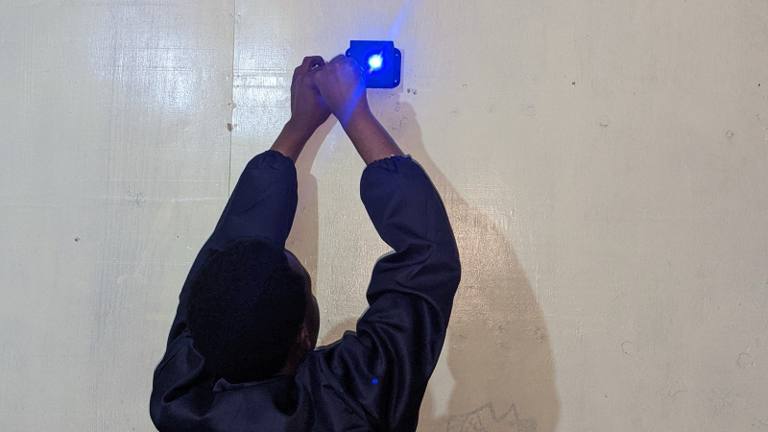
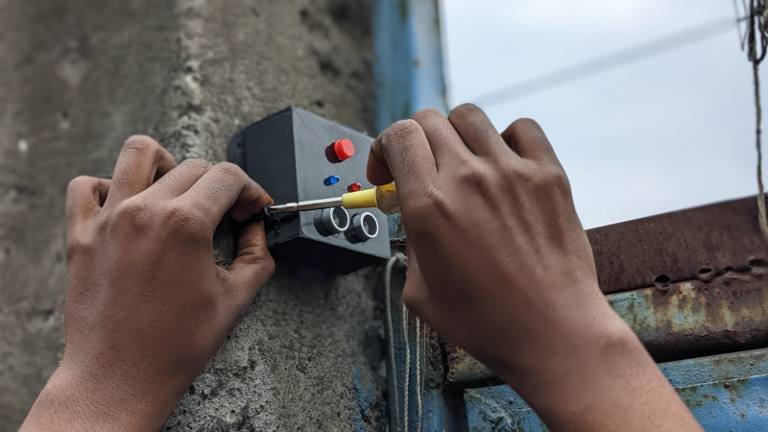
KivuGuard’s an innovative, community-based PeaceTech infrastructure designed to eliminate the deadly element of surprise used by armed groups in the conflict-ridden eastern Democratic Republic of Congo. Born from my personal experience of surviving armed violence in Beni, this resilient early warning system operates entirely offline, using low-power LoRa networks, SMS, and a central AI-powered platform adapted for fragile environments without internet access. The project equips vulnerable households with outdoor intrusion sensors and indoor alert modules. When a threat is detected, localized sirens immediately alert neighbors, while encrypted GPS data is transmitted via LoRa to a central platform. Using AI, this platform analyzes the alerts in real time to instantly coordinate a rapid response with local security forces, community radio stations, and local peace mediators. To date, KivuGuard is operational in 150 high-risk households in North Kivu, having thwarted nighttime raids and potentially saved over 800 lives. Recently named a global winner of the PACEY 2026 award, KivuGuard aims to expand this youth-led digital governance framework to an additional 1,000 households, transforming local security into a collective, participatory, and profoundly human endeavor.
How does your project support peacebuilding and/or conflict resolution efforts in the context of a humanitarian crisis or developmental context?
KivuGuard directly addresses the communication void in eastern DRC's active conflict zones. Armed groups leverage civilian isolation to conduct silent, unannounced overnight raids. By deploying an offline, decentralized early warning network, we dismantle the weapon of surprise. The system empowers vulnerable households to protect themselves nonviolently while routing encrypted data to local mediators and security forces, transforming passive survival into active collective accountability and grassroots resilience.
In what ways does your project contribute to the existing PeaceTech ecosystem and research efforts in a compelling way?
Our project KivuGuard advances the PeaceTech ecosystem by proving that high-impact crisis response can function entirely independent of internet access or central power grids. By combining low-cost, decentralized LoRa mesh hardware with localized AI threat routing, our project creates a resilient architectural template for digital governance in fragile settings. It bridges the research gap between open-source civic tech and immediate physical protection, showing how local tech can operationalize human rights monitoring.
How does your work leverage collaborations and partnerships to unlock new opportunities and maximize impact?
We seamlessly bridge the gap between citizens and institutions. KivuGuard integrates automated alerts with 5 local community radio stations, civil society networks, grassroots peace mediators, and public security cells to operationalize rapid, nonviolent protective interventions.
Impact
What is the potential of your work for widespread impact? How do you meaningfully improve the lives of people?
The potential for widespread impact is massive because our hardware is open-source, affordable, and highly replicable across volatile corridors in Sub-Saharan Africa. We meaningfully improve civilian lives by removing the constant terror of silent nighttime massacres. Our system provides families with the critical seconds needed to safely evacuate, restoring human dignity, social trust, and community safety to thousands of marginalized, off-grid populations.
Source: KivuGuard Deployment Ledger; Local Civil Society Incident Reports; Basel Peace Office
Receiving the 2026 Kluz Prize Special Distinction is a monumental validation for youth-led engineering in the Global South. This recognition proves that PeaceTech must be deeply human and decentralized, giving vulnerable, off-grid communities the autonomous digital tools to protect human lives and build sustainable peace from the grassroots up.— Elie Yossa, Founder & CEO, KivuGuard
KivuGuard in action